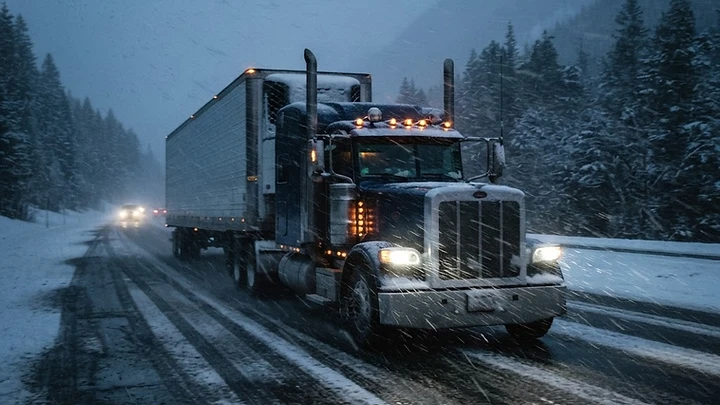
Snow, sleet, and ice raise the stakes on every run: accident risk climbs, breakdowns strand, and schedules slip. Winter driving rewards preparation and punishes bravado. Roughly one in five crashes is weather-related, and about a quarter of those happen on snow or ice. Here's how to be in the group that arrives.
Prepare the Truck Before the Cold Hits
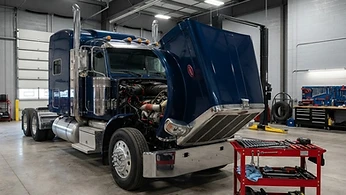
- Service on schedule: oil, coolant, brakes, transmission, washer fluid — winter is not the season to find out something was worn.
- Test the battery — cold slashes capacity. Replace the weak one before it strands you.
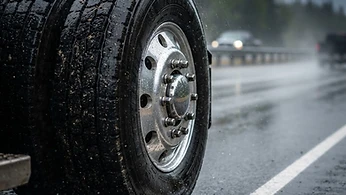
- Tires: check tread and inflation; run snow or winter tires where conditions justify them.
- Wipers and fluid: fresh blades, freeze-resistant fluid.
Build a Real Winter Kit
Blankets, warm clothing, bottled water, snacks, flashlight, first aid, ice scraper, jumper cables, compact tools — plus chains for mountain or rural lanes. Keep the tank at least half full to prevent fuel-line freeze. And clear every window, light, mirror, and the roof before you roll: a snow-blind truck is a hazard to everyone.
Drive Like Conditions Own the Road — Because They Do
- Slow down on snow and ice. Nothing else on this list works if you don't.
- Stretch the gap: 8–10 seconds of following distance, and protect it against tailgaters.
- Smooth is fast: gradual throttle, gradual brakes. Sudden inputs cause skids.
- Turns and lane changes: make them slow and wide. Sharp inputs spin trucks.
- Lower gears on hills for engine braking and control.
Know Your Enemies
- Black ice: bridges, shaded spots, early mornings. If conditions suggest it, drive like it's there.
- Heavy snow: keep momentum steady, never stomp the brakes.
- Slush and sleet: hydroplaning weather — smooth inputs only.
- Fog and blowing snow: wipers, defroster, low beams — and if you can't see, don't push it.
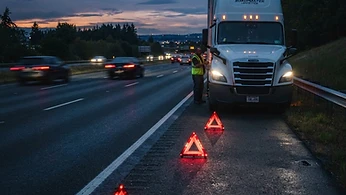
- Disabled vehicles: give them room; secondary crashes are common.
- Snowplows: give them the road and only pass when it's genuinely clear.
Plan Like the Weather Is the Dispatch
Check forecasts before you leave, build in extra hours, and know your alternates. Headlights on, dispatch looped in, and a plan for where you'll stop if the road closes.
Winter driving is preparation plus patience. The drivers who make it through are the ones who respect the conditions from the first mile — and never let a schedule talk them out of it.